
Monday, August 12, 2019

More Mysterious Visitors


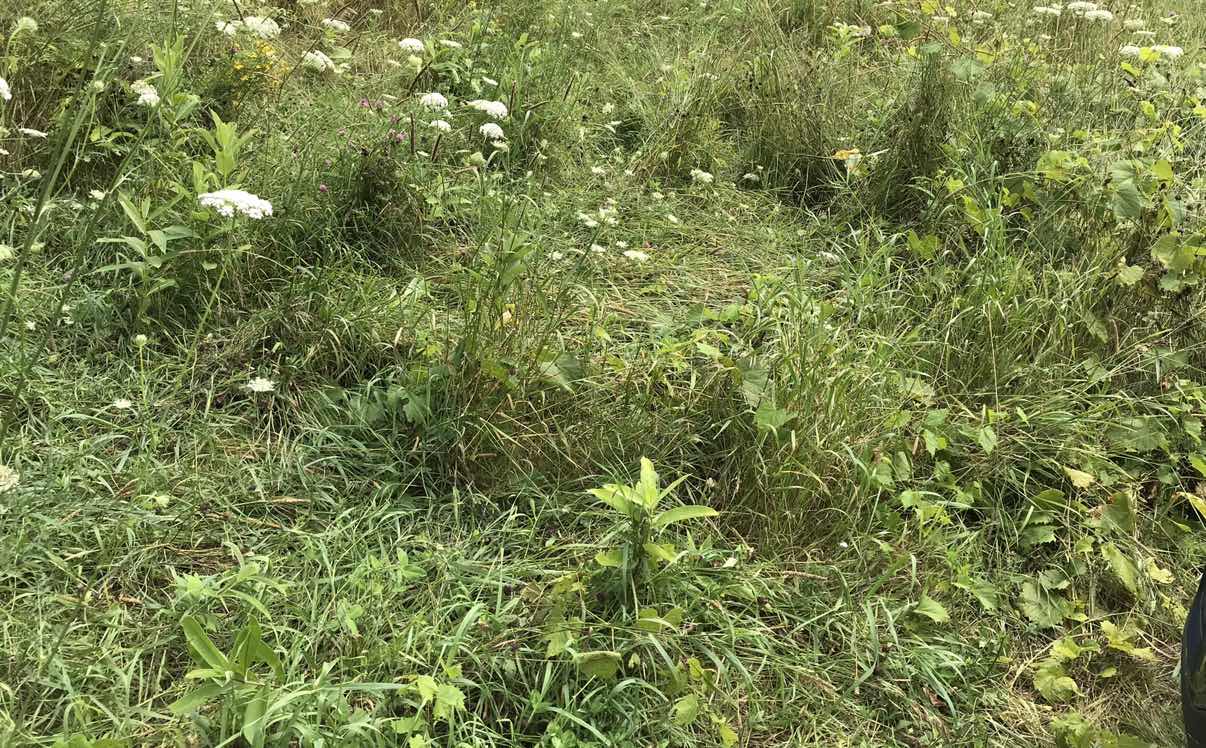
It was obvious from the moment we arrived in the meadow on Sunday that someone had been there since our last visit. (Someone other than our mysterious ATV-driving excavators, who had been back to dig another hole beside the first.)  Great swaths of grass were tramped down and limbs were snapped off two sumac trees that grow well inside the meadow. 

Our first thought was that someone had been driving around recklessly, but there were no tire tracks and the branches were pulled off, not bashed into. “Bears?” Ian suggested. But we haven’t heard of any bear sightings in this area for years. More likely a freak whirlwind of some sort, as the patches of trampled grass were spread all over the meadow, apparently randomly. 


But then I spotted something that makes me sure Ian’s first guess was probably right. One of the damaged trees was deeply scored with claw marks. Not just kids on a balloon-tire ATV, then. Lions and tigers seem less plausible (although Jungle Cat World isn’t too far away), so that would leave a romping bear. Or a family of bears, more likely. 

A news search shows one was seen in the area last spring, so it isn’t impossible, and the neighbour’s elderly but loud dog has gone silent, so our meadow may be more attractive to wildlife than it has been in years. 

We’ll need to get bear spray, I guess. 


Sunday, May 26, 2019

A Wet Spring and Mysterious Doings


Usually our property is very dry - its soil is almost all fine sand on top and coarser sand and gravel a few feet down, so water drains away almost immediately. We never see standing water in the meadow or on the road, even in the wettest weather. Until this year. 

The first sign that this was going to be a wetter year than normal came as the snow (fairly heavy this winter, but we’ve seen it deeper) melted and an actual running stream formed from the meadow out to the county road. When the snow starts to melt it’s usually a bit boggy between the road and the woods for a few weeks, but nothing like this. It was a few weeks after the snow melted before the water all drained away and it returned to normal. 

Only it didn’t.  As soon as the Spring rains came (and it’s been a late, fairly wet Spring) , the ground became waterlogged again and it still hasn’t dried out. Our feet are squishing through water as we walk through the meadow. Only the thick layer of turf keeps it from just becoming a mud pit. 


A small mystery appeared last weekend when I walked up to the upper meadow outside the woods to plant some Giant Mongolian Sunflower seeds. We’d noticed a set of fresh tire tracks in the grass on the way in - not a car but something smaller like an ATV. They turned out to lead part way up the hill to where an unexplained hole had been dug. Less than a metre square, it looks like it might have been quite deep, as lots of rocks were unearthed in the digging. No attempt was made to hide the excavation - the sod was carefully removed but instead of being placed back over the bare ground, it was laid out some distance away. And the rocks were just left there, instead of being tossed into the nearby woods as you would do if you were being stealthy. The dug soil must’ve been shovelled onto a tarp or something, because it was all cleanly replaced - no dirt strewn around the hole at all. 

If something was buried, it can’t have been very big, as the soil isn’t mounded up at all. If seeds were being planted, the gardeners dug much deeper than is necessary in that sandy soil. And the whole operation was still very fresh when I came across it - the digging must’ve been done the night before or even that morning, because the soil hadn’t dried out yet. 

I checked today and nothing had been touched since last week. No new tracks, either. 


But the sunflower seeds are already coming up. I planted a few more in the mystery plot - no sense wasting a nice, clear patch of earth. 

Tuesday, August 21, 2018

Finally, a new roof on the yurt

 Finally, after a couple of months of missed opportunities, rainy days and simple laziness, the yurt looks like new again. Our friend Stephen drove out last Sunday (interrupting a paying job to do so) and helped me remove the tattered, faded old canvas and the equally battered roof cover I'd put on top of it. We patched the tears in the Tyvek layer and the holes that generations of mice and squirrels had made in the felt, and unfurled a pristine new canvas from Groovy Yurts. It looks almost as good as the day we first put it up, eight years ago.

There are more monarch butterflies in the meadow this summer than in recent years. Two years ago, when grass took over the meadow, the usually abundant milkweed almost disappeared. Some came back last year, but this year it's fully returned, and with it the monarchs. Even before the grassy summer, when there was a lot of milkweed, there never seemed to be that many monarchs, but suddenly there are. This summer there's been at least one flitting around every time we've visited, and this weekend there were two or three and I spotted quite a few caterpillars happily chomping away.They will probably be the ones that will make the long migration to Mexico at the end of the summer.

The adult butterflies, of course, will happily take nectar from any kind of flowers, but the caterpillars demand a diet more specific than even the pickiest human child: milkweed. Nothing else will do, though I've heard that the adults are sometimes fooled into laying eggs on the related dog-strangling vine (Cynanchum rossicum), which the hatching larvae cannot eat.

In recent years the monarch butterfly has become a symbol of the effect of human activity on the world's wildlife, and we have been exhorted to plant and protect milkweed in an attempt to keep the population healthy. Obviously the monarchs face greater challenges all along their migratory path than just the diminishing presence of milkweed in southern Ontario, but something must be working because their numbers seem to be increasing.