
Two summers ago an unknown little sapling popped up behind our garage. Last year there was another one, and the first was now big enough to identify it as a mulberry. This year there was a third, and the other two were now large enough that they absolutely
couldn't be allowed to stay another year or we'd have three more large trees in the back yard, which would be a problem even if they hadn't been right up against the garage. So the last full moon I dug all three up and transplanted them out to the meadow.
I wasn't at all sure how well this was going to work, as one book I consulted said that mulberry trees have sensitive roots and don't like to be moved. But living or dead, they couldn't stay where they were, so transplanting was better than just removing. I dug fairly big holes (though the roots weren't very large on any of them), gave them a few shovelfuls of manure and a lot of water, and hoped for the best.
My annual trip to BC kept us away from the property for the next two weeks, and there was little rain the whole time. As our soil there is almost pure sand, I knew they'd have dried out pretty badly, which can be fatal for even nursery-reared seedlings. But when we got back to check on them, all three were still alive, and the soil was surprisingly still a bit moist. A month later and the two larger ones are flourishing, while the smallest (which was shocked the most by the move) is showing signs of recovery. If it can continue to withstand insects for the rest of the summer, I think all three will survive.
I like mulberries, and they should look quite nice in their little corner of the meadow. This violates our intention to only have native trees on the property, but we couldn't just kill them. How they got planted where they did is a mystery, as the nearest possible parent is half a block away, and I can't imagine why a new one came up each year, but we're glad they have a new home.

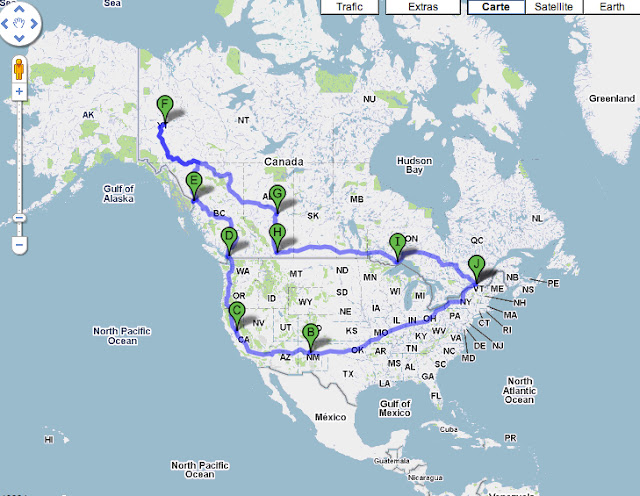 Once again, Yves and the Groovy Yurts truck are on the road, delivering yurts and Mongolian goodies around North America. This year they're going all the way up to the Yukon! Photos from on the road are posted here.

